White flakes on your shoulders. Constant scalp itching. Embarrassing moments during meetings or social events.
If you’ve been struggling with dandruff, you’re not alone.
Dandruff affects millions of people and is one of the most common scalp concerns worldwide. The good news is that dandruff can usually be controlled with the right treatment and scalp care routine.
In this guide, you’ll learn what causes dandruff, how to treat it effectively, when to visit a salon or dermatologist, and how to prevent it from returning.
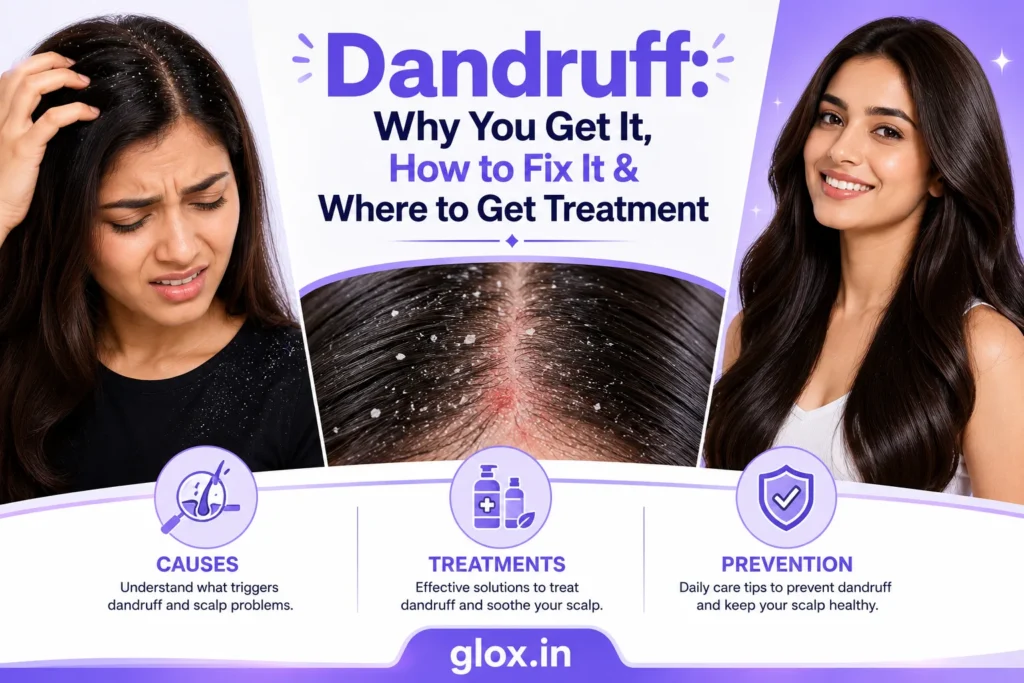
Table of Contents
How Do You Get Rid of Dandruff?
Dandruff happens when dead skin cells shed from the scalp faster than normal. Common causes include oily scalp, dry skin, fungal overgrowth, product sensitivity, and skin conditions such as seborrheic dermatitis.
The most effective treatment is using a medicated anti-dandruff shampoo containing ingredients such as ketoconazole, zinc pyrithione, selenium sulfide, or salicylic acid. If symptoms persist for more than four weeks, consult a dermatologist for professional treatment.
What Is Dandruff?
Dandruff is a scalp condition that causes visible white or yellow flakes to appear on the scalp, hair, and clothing.
While dandruff isn’t dangerous, it can be uncomfortable, frustrating, and difficult to manage without proper treatment.
Common symptoms include:
- White or yellow scalp flakes
- Itchy scalp
- Scalp irritation
- Oily scalp patches
- Dry scalp sensation
- Mild redness
What Causes Dandruff?
Several factors can contribute to dandruff.
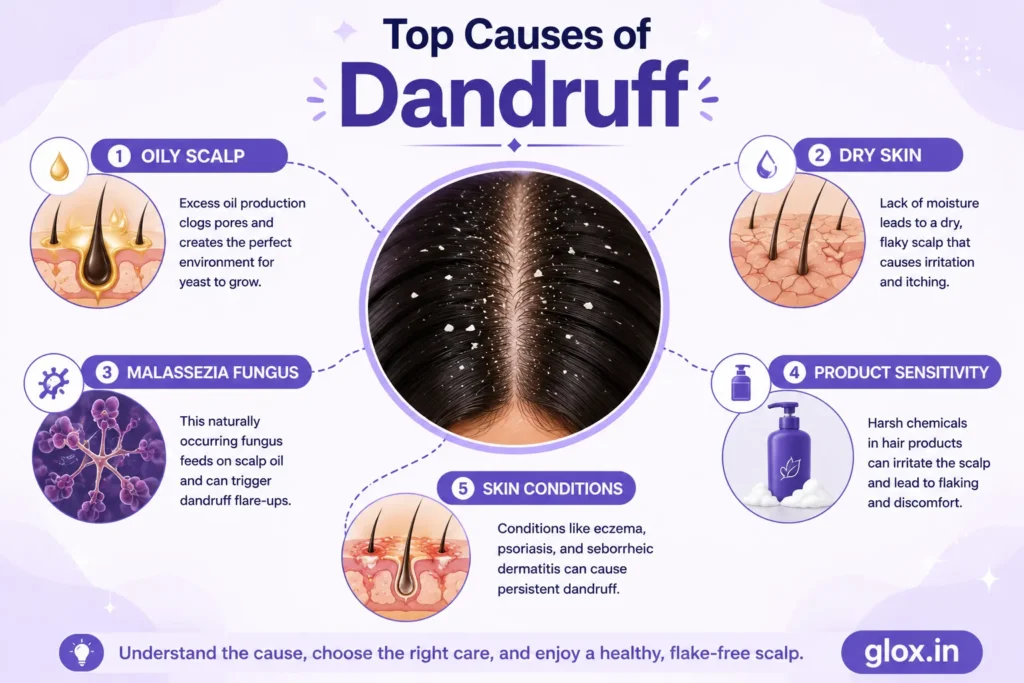
1. Oily Scalp
Excess oil production causes dead skin cells to stick together, creating visible flakes.
Common signs:
- Greasy scalp
- Yellowish flakes
- Persistent itching
2. Dry Scalp
Dry weather and dehydration can cause small white flakes.
Common signs:
- Tiny white flakes
- Tight scalp feeling
- Increased symptoms during winter
3. Malassezia Fungus
A naturally occurring fungus called Malassezia lives on most scalps.
When it grows excessively, it can irritate the scalp and speed up skin cell turnover, causing dandruff.
4. Hair Product Sensitivity
Some shampoos, dyes, styling sprays, and treatments may trigger scalp irritation.
Common triggers:
- Hair coloring products
- Fragranced shampoos
- Alcohol-based styling products
5. Skin Conditions
Sometimes dandruff is linked to:
- Seborrheic dermatitis
- Psoriasis
- Eczema
- Contact dermatitis
These conditions often require professional medical treatment.
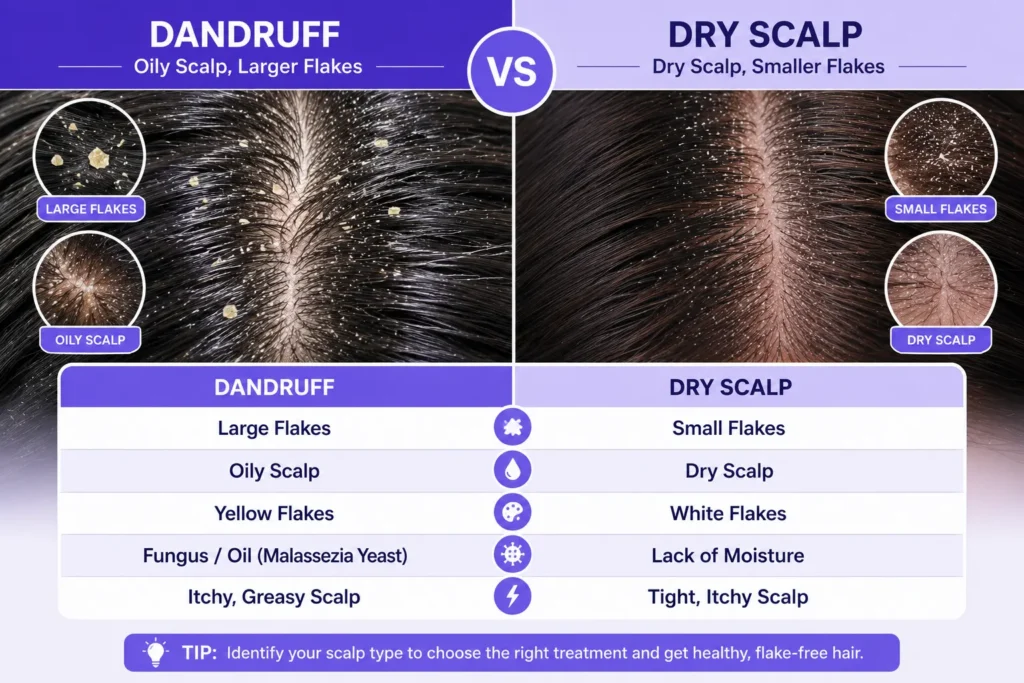
Dandruff vs Dry Scalp: What’s the Difference?
Many people confuse dandruff with dry scalp.
| Dandruff | Dry Scalp |
|---|---|
| Large flakes | Small flakes |
| Oily scalp | Dry scalp |
| Often itchy | Tight feeling |
| Yellow or white flakes | White flakes |
| Caused by oil or fungus | Caused by lack of moisture |
Quick Answer
If your scalp feels oily and produces larger flakes, you likely have dandruff. If your scalp feels tight and produces tiny dry flakes, you likely have a dry scalp.
Is Dandruff Contagious?
No.
Dandruff is not contagious.
You cannot catch dandruff from another person through physical contact, sharing combs, or using the same salon chair.
Can Dandruff Cause Hair Loss?
Dandruff itself does not directly cause permanent hair loss.
However, severe itching and scalp inflammation can weaken hair roots and contribute to temporary hair shedding.
If you’re experiencing both dandruff and significant hair loss, it’s important to consult a dermatologist.
How to Get Rid of Dandruff at Home
Step 1: Use the Right Anti-Dandruff Shampoo
Look for shampoos containing:
| Ingredient | Best For |
| Ketoconazole | Severe dandruff |
| Zinc Pyrithione | Everyday dandruff |
| Selenium Sulfide | Oily scalp |
| Salicylic Acid | Flake removal |
| Coal Tar | Severe scaling |
| Sulfur | Mild dandruff |
Step 2: Use Shampoo Correctly
Many people use dandruff shampoos incorrectly.
For best results:
- Apply directly to the scalp.
- Massage gently.
- Leave it on for 5-10 minutes.
- Rinse thoroughly.
- Repeat consistently for 4 weeks.
Step 3: Improve Your Scalp Care Routine
Do
- Wash your hair regularly
- Keep your scalp clean
- Stay hydrated
- Manage stress
- Brush your hair gently
Avoid
- Heavy oils on the scalp
- Excessive heat styling
- Skipping hair washes
- Overusing dry shampoo
- Harsh chemical products
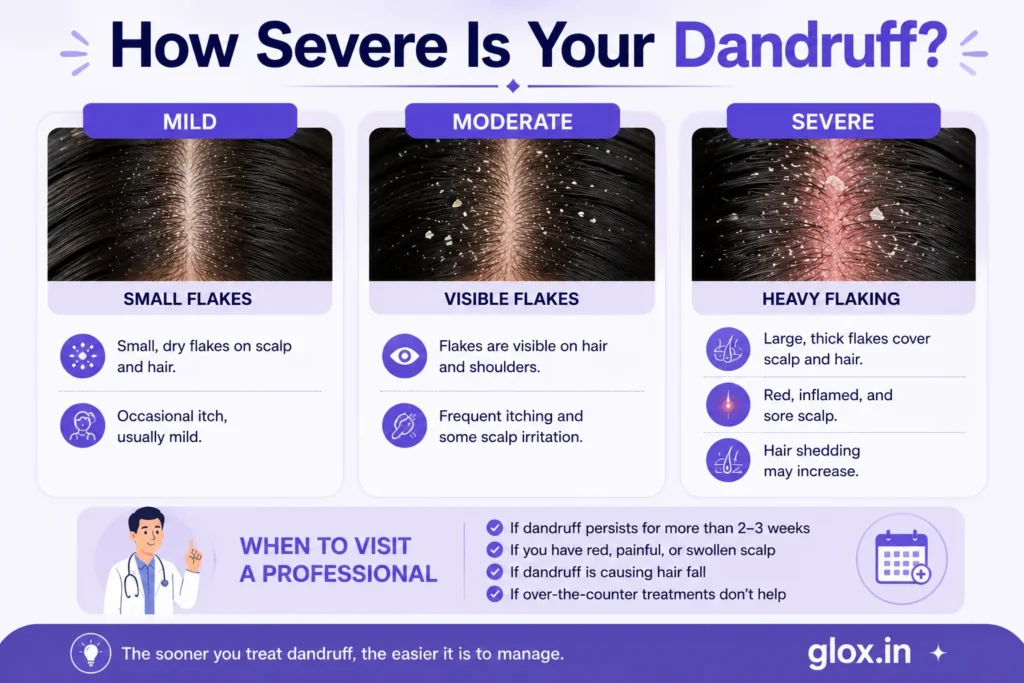
Best Dandruff Treatments Based on Severity
Mild Dandruff
Symptoms:
- Occasional flakes
- Mild itching
Recommended Treatment:
- Zinc pyrithione shampoo
- Better scalp hygiene
- Weekly scalp detox
Moderate Dandruff
Symptoms:
- Frequent flakes
- Noticeable itching
Recommended Treatment:
- Ketoconazole shampoo
- Professional anti-dandruff salon treatment
- Regular scalp cleansing
Severe Dandruff
Symptoms:
- Persistent itching
- Thick scaling
- Redness
- Hair shedding
Recommended Treatment:
- Dermatologist consultation
- Prescription medications
- Medical scalp treatments
When Should You See a Dermatologist?
Consult a dermatologist if:
- Symptoms persist after 4 weeks
- Scalp becomes red or swollen
- Bleeding occurs
- Hair loss increases
- Flakes spread beyond the scalp
- Over-the-counter products stop working
Early treatment can prevent complications and improve scalp health faster.
Salon vs Clinic for Dandruff Treatment
Many people wonder whether they should visit a salon or a clinic.
Salon Treatment
Best For:
- Mild dandruff
- Oily scalp
- Regular maintenance
Services Include:
- Hair spa
- Scalp detox
- Anti-dandruff treatments
- Deep cleansing therapies
Average Cost:
₹800 – ₹3,500
Dermatology Clinic
Best For:
- Severe dandruff
- Hair loss
- Persistent symptoms
Services Include:
- Scalp diagnosis
- Prescription shampoos
- Medical scalp peels
- Anti-fungal medications
Average Cost:
₹1,000 – ₹6,000+
Which One Should You Choose?
Choose a salon if:
- You have mild or moderate dandruff
- You want maintenance treatments
- You need scalp cleansing
Choose a clinic if:
- Symptoms are severe
- Home treatment isn’t working
- You’re experiencing hair loss
- Your scalp is inflamed
Dandruff Treatment Cost in India
| Treatment | Average Cost |
| Anti-Dandruff Shampoo | ₹300–₹1,500 |
| Hair Spa for Dandruff | ₹800–₹2,500 |
| Scalp Detox | ₹1,500–₹4,000 |
| Dermatologist Consultation | ₹500–₹2,000 |
| Prescription Treatment | ₹1,000–₹6,000+ |
Prices may vary depending on your city, provider, and treatment plan.
Natural Remedies: Do They Actually Work?
Some natural remedies may help reduce symptoms.
Tea Tree Oil
May help control fungus and reduce irritation.
Coconut Oil
Can improve moisture levels for dry scalp.
Aloe Vera
May help soothe irritated skin.
Neem
Traditionally used for scalp care.
Important Note
Natural remedies may provide temporary relief but usually do not replace medically proven dandruff treatments.
How to Prevent Dandruff from Coming Back
Dandruff often requires long-term maintenance.
Follow these tips:
- Wash your hair regularly
- Use anti-dandruff shampoo weekly
- Avoid excessive scalp oil buildup
- Reduce stress levels
- Avoid harsh styling products
- Limit heat styling
- Maintain a healthy diet
Consistency is the key to keeping dandruff under control.
Frequently Asked Questions
What is the fastest way to get rid of dandruff?
The fastest way to reduce dandruff is to use a medicated anti-dandruff shampoo containing ketoconazole, zinc pyrithione, or selenium sulfide and use it consistently for several weeks.
How often should I wash my hair if I have dandruff?
Most people with dandruff benefit from regular washing. Oily scalps may require more frequent washing, while curly or dry hair may need fewer washes.
Which shampoo ingredient is best for dandruff?
Ketoconazole is considered one of the most effective ingredients because it targets the fungus commonly associated with dandruff.
Can dandruff go away permanently?
There is currently no permanent cure for dandruff. Most people need ongoing scalp maintenance and occasional use of anti-dandruff products.
When should I see a dermatologist?
See a dermatologist if symptoms continue after four weeks of treatment, become painful, or are accompanied by hair loss.