Finding a salon can feel overwhelming. One stylist recommends expensive treatments, another suggests completely different products, and sometimes you leave with a haircut that looks nothing like what you wanted.
The truth is that not every salon is suitable for every hair type.
A stylist who is excellent with straight hair may not understand curly hair. A salon that specializes in coloring may not be the best choice for damaged hair repair.
In this guide, you’ll learn exactly how to choose the right salon for your hair type, avoid costly mistakes, and find a stylist who truly understands your hair.

Table of Contents
Why Your Hair Type Matters
Every hair type requires different techniques, products, and expertise.
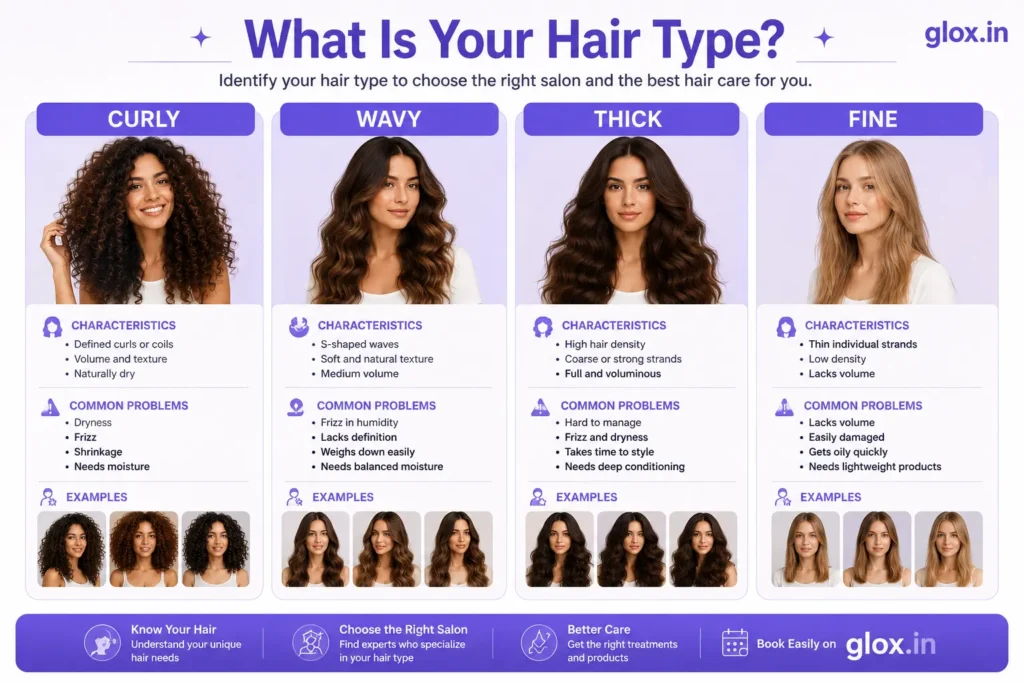
Curly Hair
Needs:
- Curl-specific cutting techniques
- Moisture-rich treatments
- Frizz management expertise
- Texture-focused styling
Straight Hair
Needs:
- Volume-enhancing cuts
- Precision layering
- Lightweight products
- Heat protection treatments
Thick Hair
Needs:
- Weight reduction techniques
- Advanced layering
- Longer appointment times
- Strong styling knowledge
Thin or Fine Hair
Needs:
- Volume-building cuts
- Gentle color treatments
- Minimal damage techniques
- Lightweight styling products
Damaged Hair
Needs:
- Repair-focused treatments
- Low-heat styling
- Professional assessment
- Safe coloring practices
Choosing a salon that specializes in your hair type dramatically improves your results.
Step 1: Research the Salon Online
Before booking, spend a few minutes researching.
Check Their Portfolio
Visit:
- Google Business Profile
- Salon Website
Look specifically for:
- Clients with hair similar to yours
- Before-and-after transformations
- Recent work
- Real client photos
Avoid salons that only showcase stock images or celebrity-inspired photos.
Step 2: Read Reviews Carefully
Most people only look at star ratings.
Instead, search reviews for keywords such as:
- Curly hair
- Hair color
- Hair treatment
- Haircut
- Styling
Look for comments mentioning:
- Professionalism
- Cleanliness
- Consultation quality
- Long-term results
If multiple customers complain about damaged hair or poor service, consider it a warning sign.
Step 3: Visit the Salon Before Booking
A quick visit can tell you a lot.
Hygiene Checklist
Check:
- Clean floors
- Sanitized tools
- Fresh towels
- Organized workstations
- Clean wash areas
- Professional staff appearance
Poor hygiene can lead to scalp infections, irritation, and unsatisfactory results.
Step 4: Ask These Questions Before Booking
A good salon will happily answer questions.
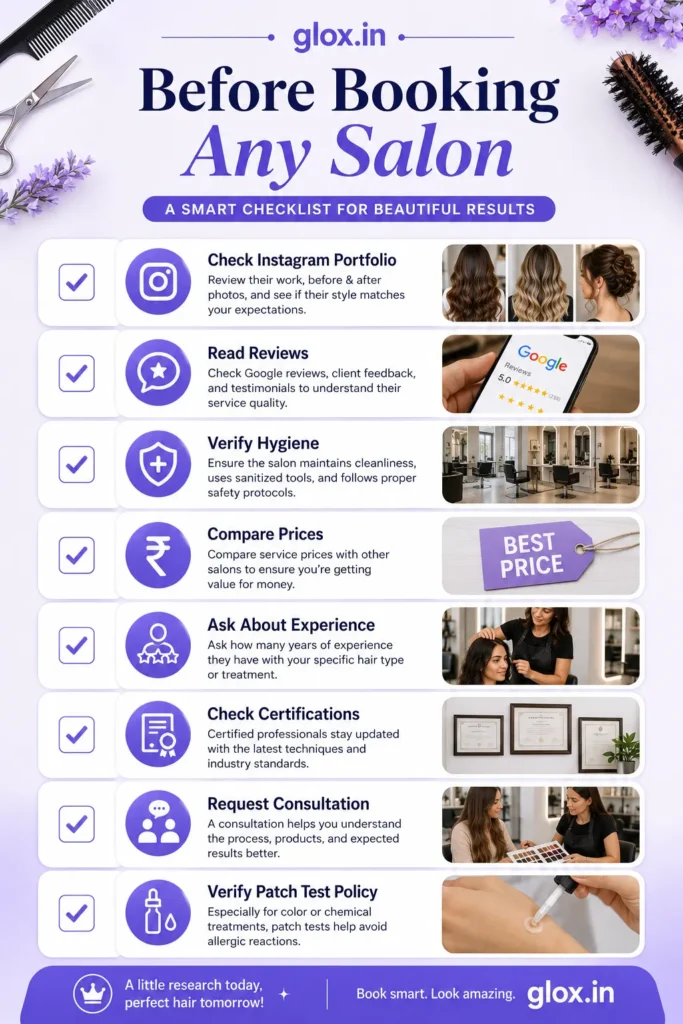
1. Do you have experience with my hair type?
Ask directly.
Examples:
- “Do you work with curly hair regularly?”
- “Do you specialize in fine hair?”
- “Have you treated damaged hair before?”
2. Which stylist would you recommend?
Many salons have specialists.
Request:
- Senior stylist
- Hair color specialist
- Curl specialist
- Hair treatment expert
3. What products do you use?
Professional salons typically use reputable brands.
Quality products often indicate better training and standards.
4. Do you offer consultations?
Consultations allow the stylist to:
- Understand your goals
- Assess your hair condition
- Recommend suitable treatments
- Set realistic expectations
5. Do you perform patch tests?
For:
- Hair color
- Keratin treatments
- Chemical services
Patch testing is essential for safety.
If a salon skips this step, consider it a major red flag.
Step 5: Know the Red Flags
Some warning signs should never be ignored.
Overselling Products
Be cautious if:
- Every conversation ends with a product recommendation
- Staff push expensive packages immediately
- You feel pressured to buy
Good salons educate first and sell second.
No Consultation
A stylist who starts cutting without asking questions is taking a risk with your hair.
Unrealistic Promises
Avoid claims like:
- “Perfect results guaranteed”
- “Complete hair repair in one session”
- “No maintenance required”
Professional stylists set realistic expectations.
Poor Communication
If staff cannot clearly explain:
- Treatment benefits
- Risks
- Maintenance requirements
- Costs
You may want to choose another salon.
Step 6: Evaluate the Stylist’s Expertise
The best stylist isn’t always the most expensive.
Look for:
Technical Knowledge
They should understand:
- Hair texture
- Face shape
- Hair density
- Growth patterns
Communication Skills
Good stylists:
- Listen carefully
- Ask questions
- Explain recommendations
- Respect your preferences
Portfolio Quality
A strong portfolio shows:
- Consistency
- Variety
- Real transformations
- Similar hair types to yours
How to Choose a Salon for Curly Hair
Look for:
- Curl specialists
- Dry cutting techniques
- Curl-focused portfolios
- Moisture-based treatments
Avoid stylists who straighten every curly-haired client before cutting.
How to Choose a Salon for Thick Hair
Look for:
- Layering expertise
- Weight reduction techniques
- Experience with dense hair
A skilled stylist can make thick hair more manageable without sacrificing volume.
How to Choose a Salon for Thin Hair
Look for:
- Volume-focused cuts
- Gentle treatment options
- Fine-hair experience
Avoid excessive thinning techniques that reduce fullness.
How to Choose a Salon for Damaged Hair
Choose salons that offer:
- Hair repair consultations
- Protein treatments
- Bond repair services
- Scalp analysis
Damaged hair requires long-term care, not quick fixes.
The Smart Way: Start with a Small Service
Instead of booking an expensive transformation immediately:
- Book a haircut
- Evaluate the stylist
- Check the results after a few days
- Return for advanced services if satisfied
This minimizes risk and saves money.
FAQs
How do I know if a salon is good for curly hair?
A good salon for curly hair will have stylists experienced in curl-specific cutting and styling techniques. Check their portfolio for curly hair transformations, read customer reviews from people with similar hair types, and ask whether they offer services designed specifically for curly or textured hair.
Should I visit a salon before booking?
Yes, visiting a salon before booking is recommended. A quick visit allows you to assess cleanliness, hygiene practices, staff professionalism, equipment quality, and the overall atmosphere. This helps you make a more confident decision before committing to a service.
What is the biggest salon red flag?
One of the biggest salon red flags is skipping consultations or patch tests before treatments. Other warning signs include poor hygiene, hidden charges, aggressive product selling, and stylists who cannot clearly explain their recommendations or procedures.
How many salons should I compare before choosing one?
You should compare at least three salons before making a decision. Reviewing multiple options helps you evaluate pricing, expertise, customer reviews, hygiene standards, service quality, and stylist experience to find the best fit for your hair type and budget.
How do I choose the right salon for my hair type?
To choose the right salon for your hair type, identify your hair’s texture and needs first. Then look for salons with experience handling similar hair, review their portfolio, read customer feedback, verify hygiene standards, and schedule a consultation before booking a major service.
What questions should I ask before booking a salon appointment?
Before booking, ask about the stylist’s experience with your hair type, the products they use, consultation availability, patch test policies, expected results, maintenance requirements, and total service costs. Clear answers indicate professionalism and expertise.
Is an expensive salon always better?
No, an expensive salon is not always better. The best salon is one that understands your hair type, maintains high hygiene standards, provides transparent pricing, and delivers consistent results through experienced stylists.